
Access-control planning
A controlled door is a mechanical opening with an electronic decision layered onto it. Reader choice matters, but long-term reliability is usually determined by the lock, frame, closer, exit method, monitoring and power design.
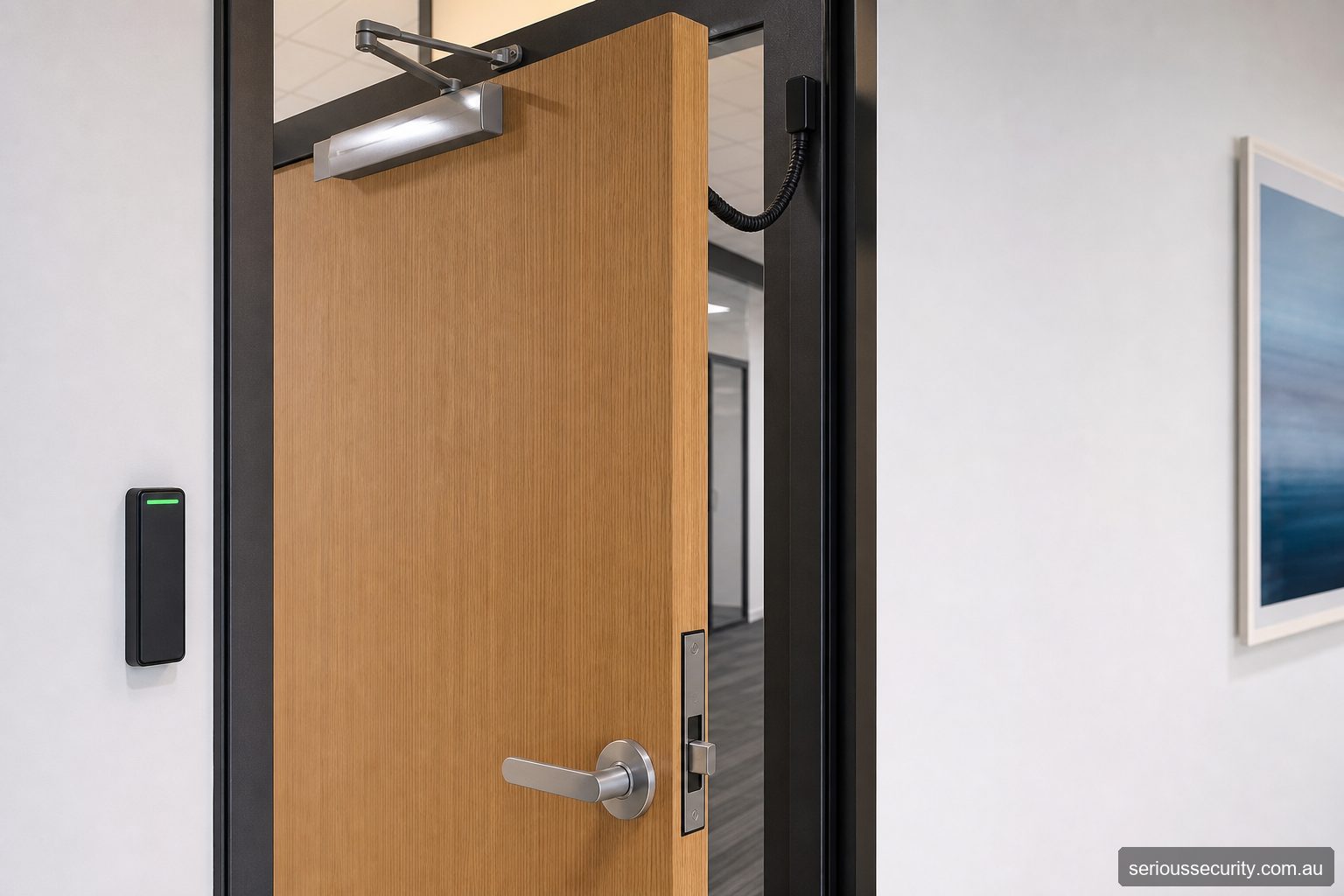
Assess the real requirement
Survey leaf and frame construction, handing, latch, hinges, closer, fire information, glazing, environment and traffic. Record how people enter, exit and obtain emergency assistance. A door that drags or fails to latch should be repaired, not hidden behind stronger locking hardware.
Design and coordination decisions
Choose a strike, electric mortice lock, magnetic lock or specialist solution only after confirming the opening and required failure behaviour. “Fail safe” and “fail secure” describe loss-of-power behaviour, not universal compliance or safety.
Testing, records and ongoing ownership
Commission authorised entry, denial, exit, door state, release time, power and agreed emergency interfaces. Identify the door consistently in software, drawings and service reports so later faults can be traced.
Decision checklist
- What user or operational problem must be solved?
- Which physical openings and related systems are in scope?
- Who approves, administers, maintains and reviews the result?
- What happens during power, network, controller or service failure?
- Which current product documents and licences support the proposed function?
- What drawings, schedules, backups, tests and training form part of handover?
Complete door schedule
| Stage or evidence | Decision to document |
|---|---|
| Opening | Leaf, frame, swing, handing and environment |
| Mechanical hardware | Hinges, closer, latch, lock and exit device |
| Electronic entry | Credential, reader, controller and access rules |
| Monitoring | Door contact, lock status and meaningful event timing |
| Power | Supply, distribution, battery and loss-of-power state |
| Interfaces | Fire, alarm, intercom, automatic door or building systems |
| Handover | Door number, models, drawings, tests and maintenance |
Implementation checklist
- Repair alignment and closing before programming around it
- Confirm egress independently from entry authentication
- Select lock function door by door
- Measure power under representative load
- Commission physical state as well as software events
Evidence to retain at acceptance
- Approved scope, assumptions and responsible parties
- Current models, versions, licences and interface description
- Door, event or workflow commissioning results
- Relevant network, power and failure behaviour
- As-installed drawings or schedules
- Administrator and operator training record
- Known limitations and outstanding actions
For Door Access Control Systems, acceptance should prove the customer-facing outcome, not merely that individual devices power on.
Worked example: why “access granted” is not enough
An employee presents an authorised card and the controller operates an electric strike. If the closer is weak, the door may stop short of latching. The software can record a valid transaction while the opening remains physically unsecured. A door contact may report “held open”, but only if it is installed, aligned and configured with a useful threshold.
The corrective action is not necessarily a longer unlock time. The installer should check latch alignment, hinge and closer condition, strike preparation, door pressure, release timing and monitoring. Commissioning should prove that the opening releases without binding and then returns to a reliably latched state from representative opening angles.
Questions to ask
How should a business start with door access control systems?
For Door Access Control Systems, document users, openings, current problems, desired workflow, other systems and constraints before selecting equipment.
Can existing equipment be used for door access control systems?
For Door Access Control Systems, possibly, after condition, compatibility, support and ownership are verified. Reuse should be an assessed decision, not an assumption.
What should a proposal for door access control systems state?
For Door Access Control Systems, it should identify inclusions, exclusions, models where appropriate, interfaces, client responsibilities, failure behaviour, testing and handover.
Who should review door access control systems?
For Door Access Control Systems, the client and security designer, plus IT, building, fire, privacy or specialist contractors where their systems and duties are affected.
What must be confirmed before publishing Door Access Control Systems?
For Door Access Control Systems, current product capability, company offering, site-specific requirements and any safety, privacy or compliance statements require human review.
Request an assessed scope
Share the doors, users, plans or photographs, current system and intended workflow. Serious Security can assess commercial sites in Sydney and Melbourne.