
Commercial access control
Access control is not simply an electronic replacement for a key. It is a way to decide who may use each entrance, apply those decisions consistently and remove access without changing a mechanical lock. Serious Security designs and installs commercial systems in Sydney and Melbourne, from a keypad on one internal door to networked platforms spanning doors, gates, lifts, alarms and CCTV.
What a well-designed system actually does
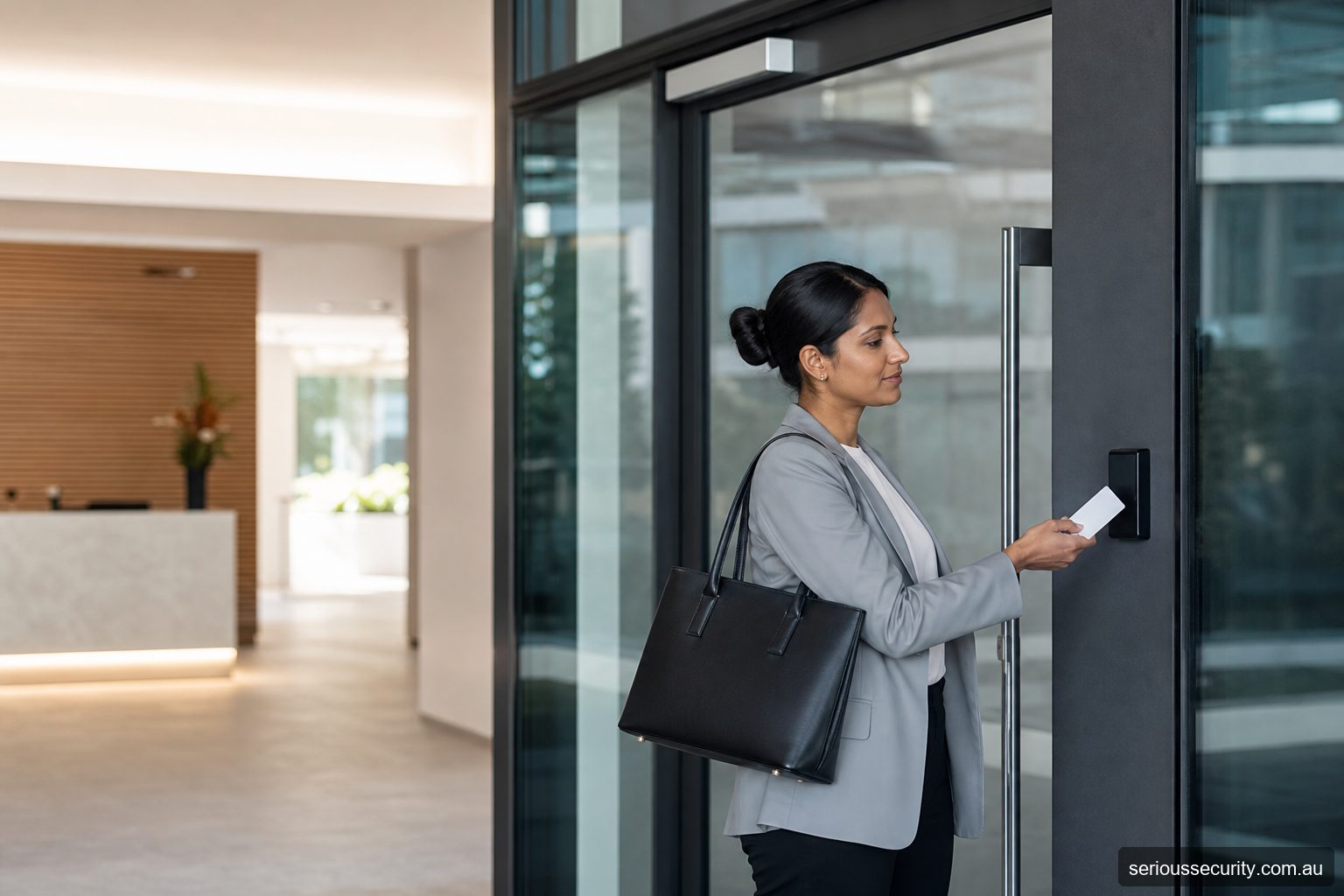
A user presents a PIN, card, fob, phone or other credential. A reader passes that information to a controller, which checks the person, door and time against programmed rules. If access is authorised, the controller briefly operates the electric lock and records the event. The door contact can then report whether the door opened, closed or remained open too long.
That distinction matters: the reader does not make the final decision, and the access system does not correct a dragging door, weak frame or unsuitable exit device. Reliable access control depends on the electronics and the physical opening working together.
Choose the scale before choosing the product
A standalone keypad can be sensible for a low-traffic internal room where a shared code is acceptable. Cards or fobs are easier to revoke individually. Networked systems suit organisations that need named users, time schedules, event records or several controlled doors. Mobile credentials may reduce physical credential handling, while biometrics introduce significant privacy and alternative-access questions.
The smallest system is not always the simplest to operate, and the most capable platform is not automatically the best value. The useful question is how often permissions change, who will administer them and what the organisation needs to know after an event.
Plan the door, power and exit path
Each proposed opening needs its own survey. The door leaf, frame, hinges, closer, lock, latch, exit hardware, cable route, power supply, battery and door-position sensor affect the design. Glass doors, gates, fire-rated doors and doors on required paths of travel need particular care.
Fail-safe and fail-secure describe what a lock does when electrical power is removed; neither term means “safe in every circumstance”. Emergency egress, fire interfaces and accessibility must be assessed for the actual building by appropriately qualified people.
Connect systems for a defined reason
Alarm integration may reduce the risk of a person entering while an area remains armed. CCTV integration can help an operator retrieve video associated with a forced-door or denied-access event. Intercom integration can let reception identify a visitor before releasing an entrance. Gate and lift control can extend permissions beyond a conventional door.
For every integration, document the trigger, the receiving system, the operator response and what happens if communications fail. A simple relay provides a different result from a supported software integration.
What to expect from design to handover
A useful site assessment establishes door condition, user groups, administration, credential choice, integrations, network ownership, future growth and work constraints. The proposal should make inclusions and assumptions visible.
Handover should include tested doors, agreed access groups, administrator training, user enrolment, device and door schedules, relevant drawings, backup arrangements and maintenance guidance. The organisation should also have a clear starter, mover and leaver process.
Access-control options at a glance
| Approach | Often suits | Main limitation to assess |
|---|---|---|
| Standalone keypad | One low-traffic door with a stable group | Shared codes are difficult to attribute and revoke individually |
| Card or fob system | Named users who need individual issue and cancellation | Credentials need an enrolment, replacement and leaver process |
| Mobile credentials | Organisations comfortable managing supported phones and digital enrolment | Device compatibility, battery, connectivity and offboarding must be considered |
| Networked multi-door system | Several doors, changing permissions, schedules and central event review | Network, backup, cybersecurity and administrator responsibilities increase |
| Integrated security platform | Sites needing coordinated access, intrusion, gates, lifts or CCTV workflows | Interfaces, licences and failure behaviour need precise specification |
Contact Serious Security today to discuss how our Access Control Systems can be tailored to your security needs.
Select your access control requirement:
Stand Alone Access Keypad
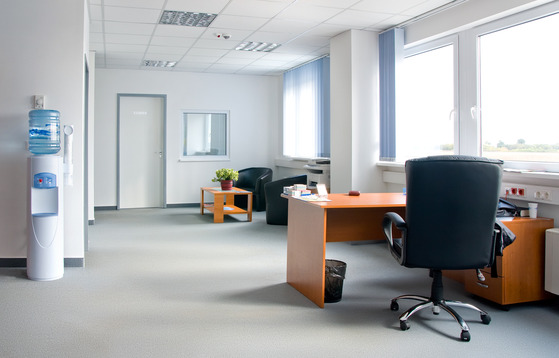
Simple one entry access control. Suitable for small premises with single office entries or doors.
Integrated Alarm & Access Control
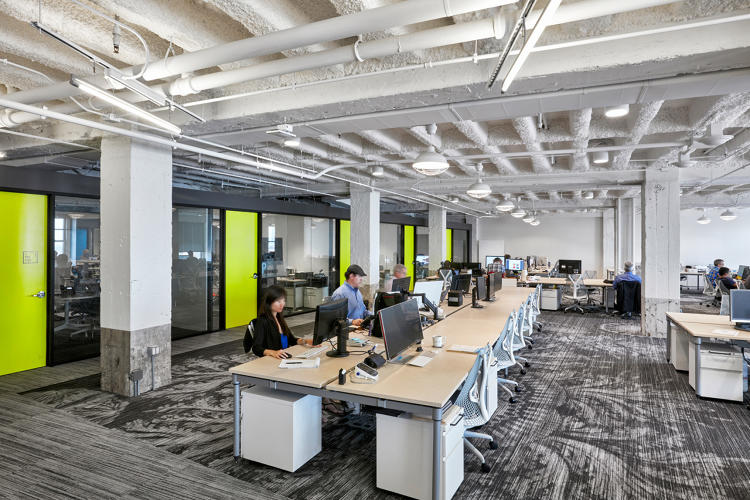
Suitable for medium sized businesses. Up to 16 readers available for multiple entry points/ doors, 256 users and 144 alarm zones.
Integrated Access Control

Card, Reader and Software solution for commercial premises that have large user traffic and require real-time monitoring, card management & reporting. Seamless integration with intrusion and surveillance systems. Suitable for businesses of all sizes.
This table is a starting point, not a product recommendation. A site may combine approaches—for example, networked card access on perimeter doors and a separately managed keypad on a low-risk internal room—provided the administration remains clear.
Explore the access-control resource centre
Use the following pathways to move from an initial question to a practical project brief. Each section explains the decisions to make before products are selected, together with the limitations, responsibilities and evidence worth requesting from an installer.
Compare access-control systems and credentials
Start with the access-control systems guide for an overview of available architectures. From there, compare card and fob access, mobile credentials, networked access control and cloud-managed systems. For higher-assurance requirements, review the practical and privacy considerations for biometric access control and facial recognition.
Plan scope, cost, installation and ongoing ownership
The commercial access-control guide explains how to convert user roles and operating rules into a door schedule. Use the access-control cost guide to compare itemised proposals, then review the installation and handover process. Existing systems can be assessed through the upgrade guide and maintenance guide.
Coordinate integrations and product platforms
Visit the access-control integrations hub before promising that systems will “work together”. It links to detailed planning for alarm integration, CCTV event workflows, video intercoms, lift access and gate and ANPR control. The access-control brands and platforms section helps buyers compare architectures and verified capabilities without treating a brand name as a complete design.
Find guidance for your property and location
Different operating environments create different access journeys. Browse the industry access-control guides for offices, warehouses, strata, healthcare, education, construction and other settings. For local service and planning information, use the Sydney access-control hub or Melbourne access-control hub; each connects to detailed suburb resources.
Prepare a brief or investigate a fault
The access-control planning guides include system fundamentals, component explanations, a site-survey checklist and questions to ask an installer. If a system is already showing a problem, start with the access-control troubleshooting hub. For applied examples, see the access-control case studies.
Follow one person through the door
Consider an employee arriving after hours. Their card identifies them at the reader. The controller checks that the card is active, that this door is in their access group and that the time is permitted. If the area is alarmed, the design must decide whether entry is denied, whether that person also has disarm authority or whether an operator becomes involved. Once access is granted, the lock releases for a defined period and the door contact confirms that the opening returned to its secure state.
Now consider a delivery driver at the same site. Giving them the employee workflow may expose staff areas; asking them to borrow a card removes accountability. An intercom call, scheduled gate credential or time-limited visitor process may be more appropriate. Good access-control design accounts for both journeys rather than treating every entrant as a permanent user.
Common mistakes that create expensive problems
- Buying readers before surveying doors: the lock, frame and exit hardware may determine the feasible design.
- Giving everyone broad access: convenient programming can defeat the purpose of zones.
- Ignoring leavers: a credential remains valid until an authorised administrator removes it.
- Assuming “integration” explains the outcome: proposals should state the event and response.
- Relying on software to fix a physical fault: no programming change can reliably compensate for a door that does not close.
- Leaving administration with one person: holidays and staff turnover can make routine changes impossible.
What to send before a site assessment
- A floor plan or simple door list, including gates and lift access
- Photographs of both sides of each proposed opening and the frame
- Approximate numbers of staff, contractors and regular visitors
- Operating hours, shift patterns and after-hours exceptions
- Existing alarm, CCTV, intercom, gate or building systems
- Known fire-rated, automatic, accessible or common-property doors
- Your preferred process for starters, lost credentials and leavers
- Likely additional doors, sites or tenants over the next few years
This information does not replace an inspection, but it lets the discussion focus on decisions rather than basic discovery.
Frequently asked questions
How should the door scope be set for Access Control Systems Sydney and Melbourne?
Can existing credentials be retained for Access Control Systems Sydney and Melbourne?
Who should administer Access Control Systems Sydney and Melbourne?
Which integrations are useful for Access Control Systems Sydney and Melbourne?
What information supports a quote for Access Control Systems Sydney and Melbourne?
Prepare an access-control brief
Send Serious Security the door locations, approximate user numbers, plans or photographs, required integrations and likely growth. The team can assess the site and prepare an itemised proposal for Sydney or Melbourne.