
System design guide
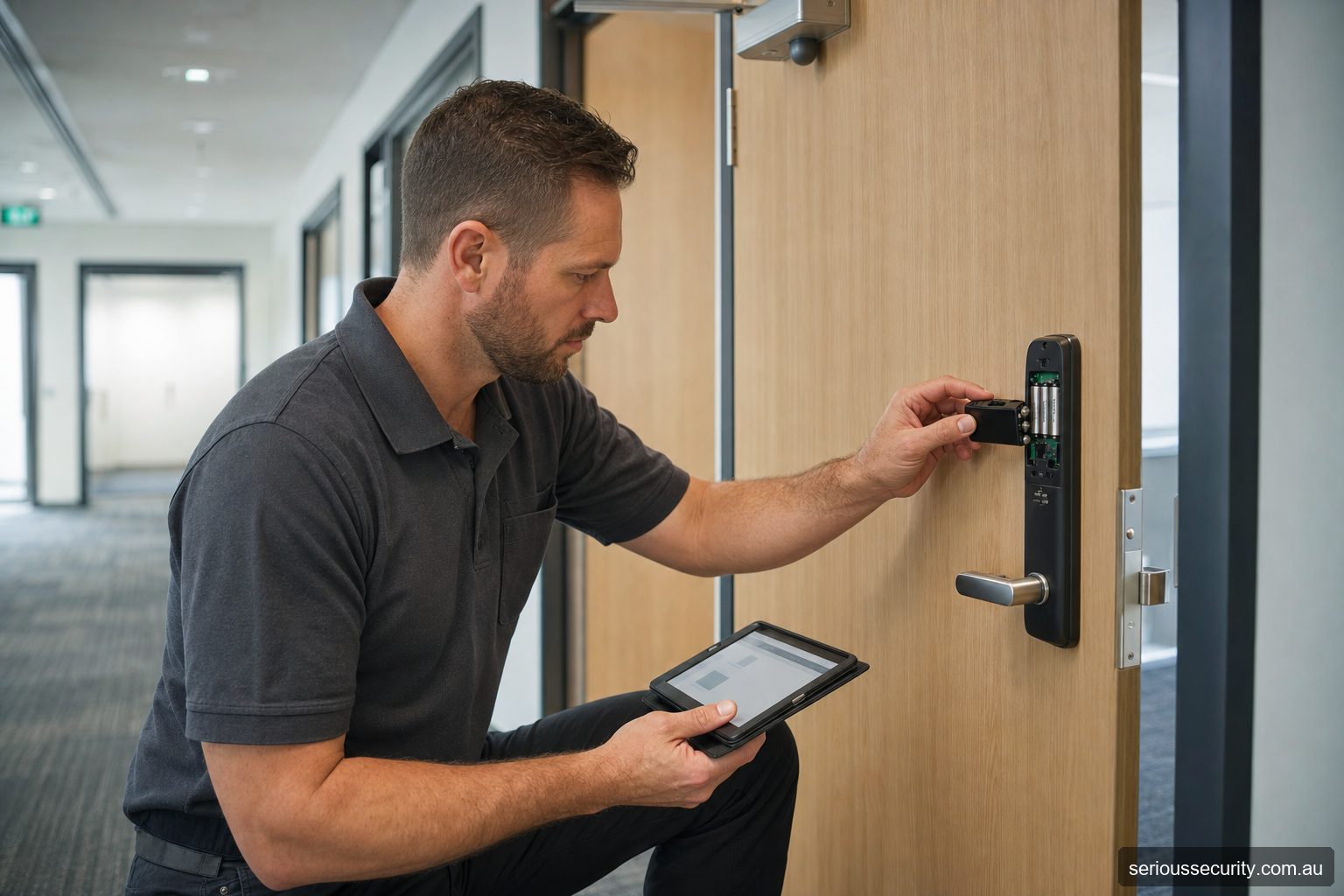
Wireless electronic locks can extend managed credentials to doors where new data cabling is difficult. “Wireless” usually describes communications; the lock still needs power from batteries or another source, and the door still needs suitable mechanical preparation, egress and closing performance.
Where this approach fits
They may suit internal offices, cupboards, accommodation-style doors or staged retrofits where traffic and audit expectations align with the product. They are not automatically suitable for every perimeter, high-traffic, fire-rated or emergency opening. Confirm environmental rating, duty cycle and approved door use for the exact hardware.
Design the complete opening and interface
Survey handing, door thickness, backset, existing preparation, latch, closer, frame and exit side. Battery replacement access and lock projection matter. Confirm whether events and permission changes update in real time, through a gateway, at scheduled intervals or when a credential is presented.
Plan safety, failure and exceptions
A flat battery, missed update, gateway outage or radio obstruction must not create an unknown door state. Document low-battery warnings, local cache, mechanical override control and emergency access. Never wedge or disable an opening because battery servicing is inconvenient.
Administration and ongoing ownership
Allocate ownership for battery stock, replacement intervals, warning response, firmware and gateway health. Record every lock by door identifier. Test revocation latency and event retrieval so administrators understand that a wireless lock may behave differently from a continuously connected wired controller.
Wireless-lock requirements
| Area | Decision |
|---|---|
| Door suitability | Preparation, duty, environment, egress and fire significance? |
| Power | Battery type, warning, replacement access and owner? |
| Communications | Real time, gateway, scheduled or credential-carried update? |
| Revocation | How quickly does a removed user stop working at every lock? |
| Events | When and how are transactions retrieved? |
| Fallback | What controlled override is available after fault or flat battery? |
Design the exception workflow
For Wireless Locks, normal authorised use is only one test. Document the lost credential, unavailable administrator, communications outage, power issue, user who cannot use the preferred method and opening that does not return to its secure state. Name who responds and what they may safely do.
Acceptance evidence
- Current models, firmware, software and licences
- Approved door, user and permission schedule
- Normal, denied and exception test results
- Power, network and service-failure behaviour
- Integration cause-and-effect results
- Administrator roles, backups and update ownership
- Known limitations and outstanding actions
Questions to resolve
Is wireless electronic locks suitable for every property?
For Wireless Locks, no. Suitability depends on the operating need, physical equipment, safety duties, administration and verified product compatibility.
What information is needed to quote wireless electronic locks?
For Wireless Locks, provide the relevant openings, users, schedules, exception cases, interfaces, site constraints and required failure behaviour.
Who should participate in a wireless electronic locks design review?
For Wireless Locks, include the client’s security or facilities owner and installer; IT, building, fire, lift, gate or privacy specialists may also be required depending on this design.
How should wireless electronic locks be tested at handover?
For Wireless Locks, test normal authorised use, denial, representative exceptions, monitoring, integrations and agreed failure conditions without creating an unsafe state.
Which wireless electronic locks claims need human confirmation?
For Wireless Locks, product capabilities, site-specific compliance, safety interfaces and any privacy or legal statements require current specialist review.
Discuss the operating requirement
Share plans or photographs, user groups, normal and exceptional journeys, integrations and known building constraints. Serious Security can assess projects in Sydney and Melbourne.