
System design guide
Lift access control restricts which floors an authorised user may select or reach. It is not ordinary door control transplanted into a lift: the lift manufacturer, controller interface, fire service operation, accessibility and building management requirements are central to the design.
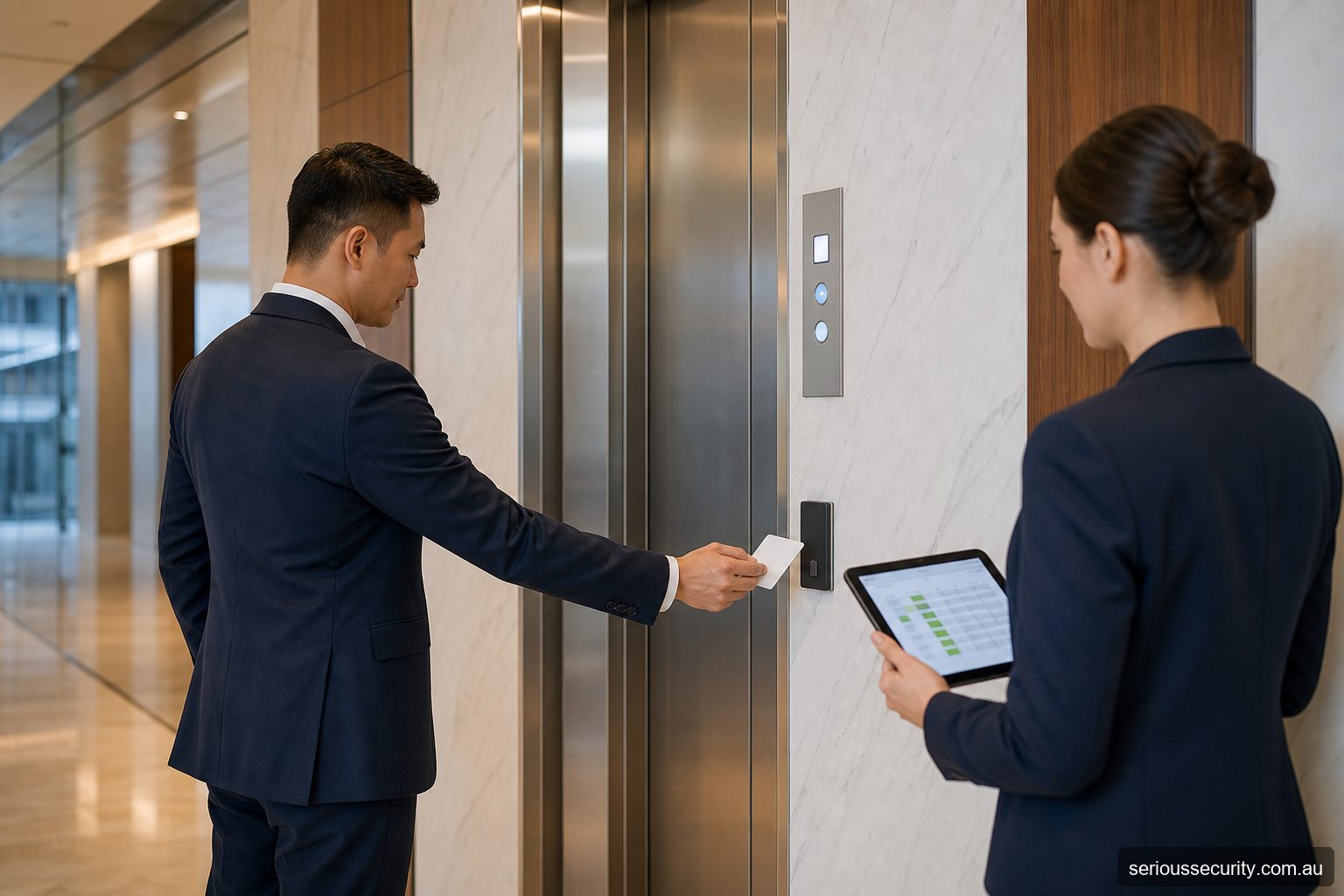
Where this approach fits
It may support offices, strata, hotels and mixed-use properties where different groups need different floors or time schedules. Clarify whether control applies inside lift cars, at destination terminals, to a lobby call or to a door leading into a lift lobby. These are different architectures.
Design the complete opening and interface
Create a floor and user matrix, including common facilities, basements, plant, after-hours access and visitor journeys. Confirm the interface and responsibilities with the lift contractor. Security installers should not make unsupported connections to lift equipment or claim compatibility without approved documentation.
Plan safety, failure and exceptions
Fire service mode, emergency operation, communications failure, power loss and evacuation requirements take precedence over normal permissions. Define what happens when the access platform or interface is offline. Do not assume that restricting a floor is an acceptable substitute for securing doors within the tenancy.
Administration and ongoing ownership
Coordinate residents, tenants, cleaners, facilities and temporary visitors. Test representative credentials in every relevant car and terminal, verify schedules and record the final interface. Future lift upgrades can affect compatibility, so retain model, drawing and responsibility information.
Lift-access requirements
| Area | Decision |
|---|---|
| Journey | Button enable, destination selection, lobby call or door access? |
| Floor matrix | Which users, floors and schedules? |
| Interface | What lift-approved connection and licence? |
| Emergency | How do fire service and emergency modes supersede access? |
| Failure | What happens if either platform or link is unavailable? |
| Testing | Which cars, terminals, users and floors prove acceptance? |
Design the exception workflow
For Lift Access Control, normal authorised use is only one test. Document the lost credential, unavailable administrator, communications outage, power issue, user who cannot use the preferred method and opening that does not return to its secure state. Name who responds and what they may safely do.
Acceptance evidence
- Current models, firmware, software and licences
- Approved door, user and permission schedule
- Normal, denied and exception test results
- Power, network and service-failure behaviour
- Integration cause-and-effect results
- Administrator roles, backups and update ownership
- Known limitations and outstanding actions
Questions to resolve
Is lift access control suitable for every property?
For Lift Access Control, no. Suitability depends on the operating need, physical equipment, safety duties, administration and verified product compatibility.
What information is needed to quote lift access control?
For Lift Access Control, provide the relevant openings, users, schedules, exception cases, interfaces, site constraints and required failure behaviour.
Who should participate in a lift access control design review?
For Lift Access Control, include the client’s security or facilities owner and installer; IT, building, fire, lift, gate or privacy specialists may also be required depending on this design.
How should lift access control be tested at handover?
For Lift Access Control, test normal authorised use, denial, representative exceptions, monitoring, integrations and agreed failure conditions without creating an unsafe state.
Which lift access control claims need human confirmation?
For Lift Access Control, product capabilities, site-specific compliance, safety interfaces and any privacy or legal statements require current specialist review.
Discuss the operating requirement
Share plans or photographs, user groups, normal and exceptional journeys, integrations and known building constraints. Serious Security can assess projects in Sydney and Melbourne.