
System design guide
Emergency lockdown is an operational response, not a button or marketing feature. It must define which openings change state, who may initiate and cancel the response, how occupants still escape, how emergency services enter and how false activation is handled.
Where this approach fits
A lockdown function may be considered where a documented risk assessment and emergency plan identify a need to rapidly restrict movement through selected doors. Schools, healthcare facilities and high-risk workplaces have different scenarios; a single “lock all” command rarely expresses the whole requirement. The organisation’s emergency planners and responsible building professionals need to own the intended response.
Design the complete opening and interface
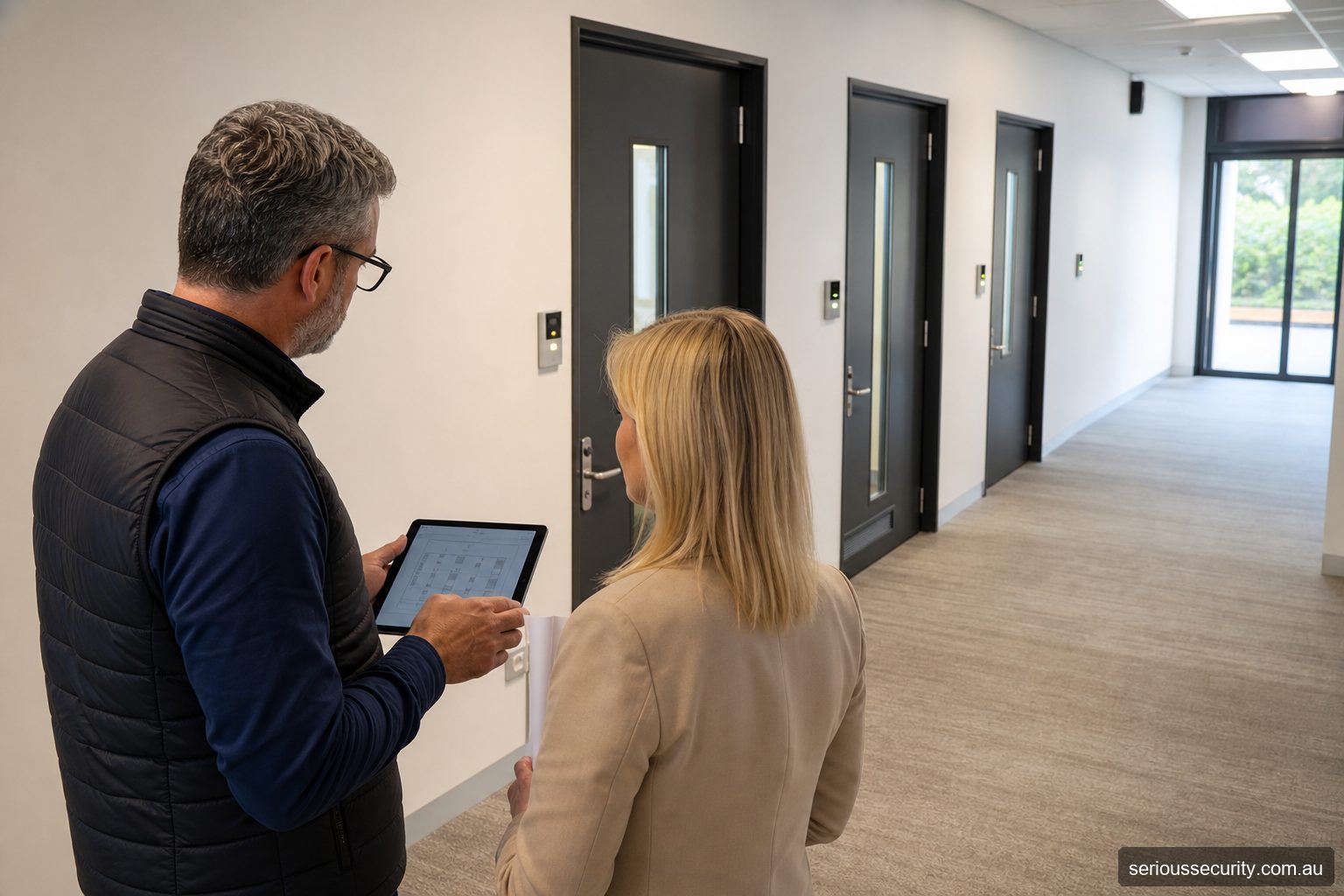
Create a door-by-door cause-and-effect schedule. Record normal lock function, lockdown state, exit method, fire or life-safety interfaces, accessibility, manual overrides and status feedback. Separate perimeter doors, internal compartment doors, gates, lifts and automatic doors because their mechanical systems and emergency roles differ.
Plan safety, failure and exceptions
No access-control command should trap occupants or override required egress. Consider power, network, controller and communications failure; accidental activation; a person already in the doorway; and access for police, fire and medical responders. The system must default to a documented, professionally assessed state rather than an improvised assumption.
Administration and ongoing ownership
Limit initiation authority and make actions attributable. Train staff through the organisation’s emergency program, not merely a software demonstration. Test notifications, door responses, cancellation and restoration in a controlled manner, then record defects. Review the plan after building changes, incidents or changes in occupancy.
Lockdown cause and effect
| Area | Decision |
|---|---|
| Initiation | Who may start lockdown and through which protected methods? |
| Door state | What changes at each opening—not just “all doors”? |
| Egress | How do occupants continue required escape? |
| Responders | How do emergency services obtain approved entry? |
| Failure | Power, network, controller and communications loss? |
| Restoration | Who cancels, verifies and returns the site to normal? |
Design the exception workflow
For Emergency Lockdown, normal authorised use is only one test. Document the lost credential, unavailable administrator, communications outage, power issue, user who cannot use the preferred method and opening that does not return to its secure state. Name who responds and what they may safely do.
Acceptance evidence
- Current models, firmware, software and licences
- Approved door, user and permission schedule
- Normal, denied and exception test results
- Power, network and service-failure behaviour
- Integration cause-and-effect results
- Administrator roles, backups and update ownership
- Known limitations and outstanding actions
Questions to resolve
Is emergency lockdown access control suitable for every property?
For Emergency Lockdown, no. Suitability depends on the operating need, physical equipment, safety duties, administration and verified product compatibility.
What information is needed to quote emergency lockdown access control?
For Emergency Lockdown, provide the relevant openings, users, schedules, exception cases, interfaces, site constraints and required failure behaviour.
Who should participate in a emergency lockdown access control design review?
For Emergency Lockdown, include the client’s security or facilities owner and installer; IT, building, fire, lift, gate or privacy specialists may also be required depending on this design.
How should emergency lockdown access control be tested at handover?
For Emergency Lockdown, test normal authorised use, denial, representative exceptions, monitoring, integrations and agreed failure conditions without creating an unsafe state.
Which emergency lockdown access control claims need human confirmation?
For Emergency Lockdown, product capabilities, site-specific compliance, safety interfaces and any privacy or legal statements require current specialist review.
Discuss the operating requirement
Share plans or photographs, user groups, normal and exceptional journeys, integrations and known building constraints. Serious Security can assess projects in Sydney and Melbourne.