
Industry access-control guide
Accommodation properties operate continuously and manage guests, staff, contractors and public hospitality areas at the same time. Guest-room locking, staff access and common-area control need a coordinated credential lifecycle and dependable fallback.
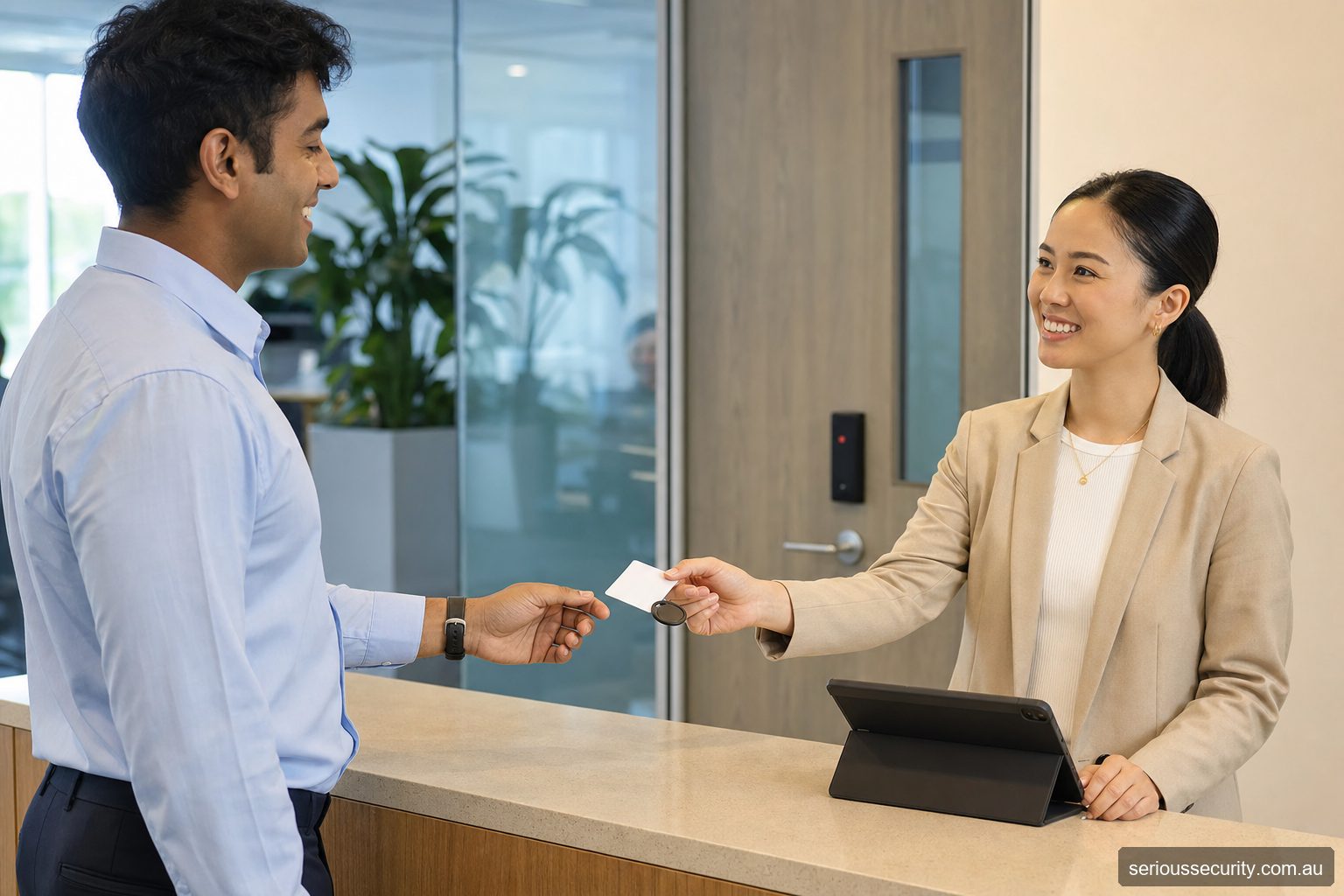
People and credential lifecycle
Guests need access for the booked period; housekeeping, maintenance, management and contractors need role and time limits. Lost guest credentials should be replaced without leaving the original active.
Zones and openings to assess
Guest rooms, back-of-house corridors, linen, kitchens, plant, liquor, offices, gyms, parking and lifts can require different systems or access groups. Confirm which platform owns each opening.
Integrations, limitations and governance
Property-management integration, mobile keys and lift access require current compatibility and failure review. Privacy, emergency entry, master credentials and offline operation deserve more attention than a feature list.
What the site survey should capture
- Normal, after-hours and exceptional user journeys
- Every proposed door, gate, lift interface and controlled zone
- Door construction, existing hardware, egress and known fire significance
- Credential issue, replacement, expiry and leaver processes
- Alarm, CCTV, intercom, visitor and operational-system interfaces
- Power, network, remote-management and outage requirements
- Who approves access and who responds to door events
- Expected changes in workforce, tenancy, facilities or sites
Hotel and Accommodation Access Control access matrix
| Area | Project-specific consideration |
|---|---|
| Operating context | Accommodation properties operate continuously and manage guests, staff, contractors and public hospitality areas at the same time. Guest-room locking, staff access and common-area control need a coordinated credential lifecycle and dependable fallback. |
| People and credential lifecycle | Guests need access for the booked period; housekeeping, maintenance, management and contractors need role and time limits. Lost guest credentials should be replaced without leaving the original active. |
| Restricted zones and openings | Guest rooms, back-of-house corridors, linen, kitchens, plant, liquor, offices, gyms, parking and lifts can require different systems or access groups. Confirm which platform owns each opening. |
| Integration and governance | Property-management integration, mobile keys and lift access require current compatibility and failure review. Privacy, emergency entry, master credentials and offline operation deserve more attention than a feature list. |
Project-readiness checklist
- List the user groups and who approves each one
- Number doors, gates, lifts and controlled zones
- Record normal, after-hours and exceptional journeys
- Identify temporary access and automatic expiry
- Assign response to held, forced and offline events
- Confirm door, network, privacy and specialist reviews
Questions for this industry
What makes hotel and accommodation access control different from ordinary office access?
For Hotels Accommodation, the user journeys, restricted areas, operating hours and exceptional events differ. The design should reflect these conditions rather than reuse a standard door package.
Which credentials suit hotel and accommodation access control?
For Hotels Accommodation, cards, fobs, PINs or mobile methods may be appropriate depending on users, environment and administration. Biometrics require a separate necessity and privacy assessment.
Can hotel and accommodation access control integrate with operational software?
For Hotels Accommodation, possibly, but data ownership, supported interfaces, update timing, exceptions and failure behaviour must be verified for the proposed systems.
How should temporary users be handled in hotel and accommodation access control?
For Hotels Accommodation, use approved, limited and expiring permissions with a clear sponsor. Avoid shared permanent credentials.
Which parts of Hotels Accommodation need professional review?
For Hotels Accommodation, door hardware, egress, fire or building interfaces, electrical work, privacy and industry-specific safety requirements need appropriate site-specific review.
Discuss the site and operating workflow
Provide plans or door photographs, user groups, operating hours, restricted areas, integrations and expected changes. Serious Security can assess commercial projects in Sydney and Melbourne.