
System design guide
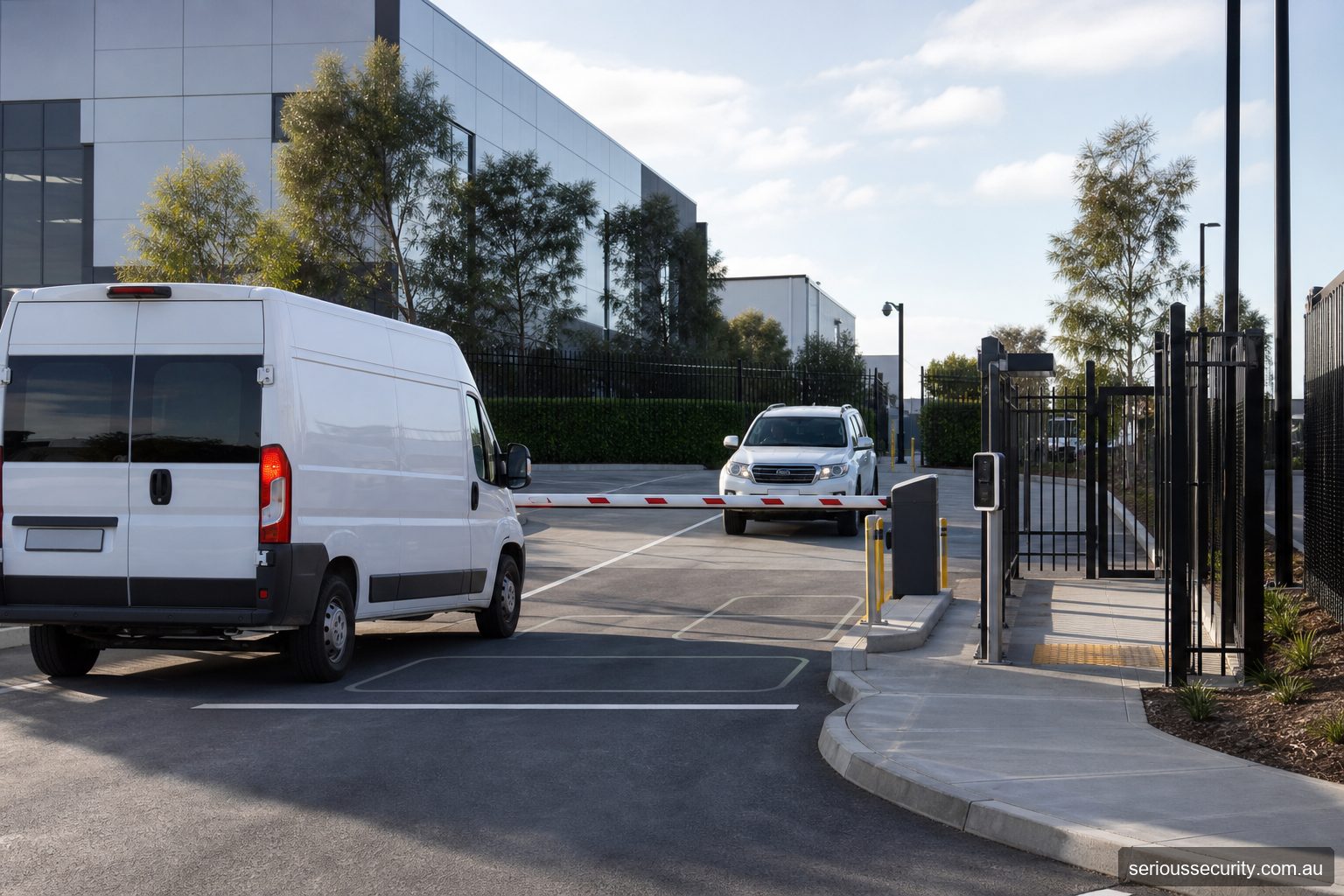
A controlled gate combines security decisions with moving machinery. The access system may authorise a vehicle or pedestrian, but the gate operator and its safety devices control movement. These responsibilities must be coordinated rather than concealed under a single “gate access” line item.
Where this approach fits
Vehicle gates may use fobs, long-range credentials, intercom release, keypads or ANPR depending on traffic, identity requirements and site layout. Pedestrians should have a safe, accessible route that does not require walking through a vehicle lane. Consider staff, visitors, deliveries, emergency services and after-hours contractors separately.
Design the complete opening and interface
Assess approach distance, queuing, sightlines, reader position, vehicle loops, photoelectric or other safety devices, fencing, manual release, power and communications. The gate contractor should confirm operator suitability and safety functions. Credential placement must not encourage drivers to lean from vehicles or stop in an unsafe position.
Plan safety, failure and exceptions
Document behaviour during power failure, fire or emergency response, obstruction, tailgating, controller outage and intercom failure. A security command must not defeat gate safety controls. Provide a controlled method for emergency and maintenance access without leaving the gate permanently open.
Administration and ongoing ownership
Set schedules and user groups around genuine vehicle access. Review lost transmitters and former staff, monitor repeated forced or held-open states and coordinate maintenance between security and gate providers. Event records should distinguish an authorisation from proof that a particular vehicle passed alone.
Gate-access requirements
| Area | Decision |
|---|---|
| Users | Staff, visitors, deliveries, contractors and emergency services? |
| Approach | Safe reader or intercom position and vehicle queue? |
| Movement | Which gate operator and safety devices control motion? |
| Credential | Fob, long-range, PIN, mobile, booking or plate? |
| Failure | Power, controller, intercom and obstruction behaviour? |
| Ownership | Security, gate, electrical and civil contractor boundaries? |
Design the exception workflow
For Gate Access Control, normal authorised use is only one test. Document the lost credential, unavailable administrator, communications outage, power issue, user who cannot use the preferred method and opening that does not return to its secure state. Name who responds and what they may safely do.
Acceptance evidence
- Current models, firmware, software and licences
- Approved door, user and permission schedule
- Normal, denied and exception test results
- Power, network and service-failure behaviour
- Integration cause-and-effect results
- Administrator roles, backups and update ownership
- Known limitations and outstanding actions
Questions to resolve
Is gate access control suitable for every property?
For Gate Access Control, no. Suitability depends on the operating need, physical equipment, safety duties, administration and verified product compatibility.
What information is needed to quote gate access control?
For Gate Access Control, provide the relevant openings, users, schedules, exception cases, interfaces, site constraints and required failure behaviour.
Who should participate in a gate access control design review?
For Gate Access Control, include the client’s security or facilities owner and installer; IT, building, fire, lift, gate or privacy specialists may also be required depending on this design.
How should gate access control be tested at handover?
For Gate Access Control, test normal authorised use, denial, representative exceptions, monitoring, integrations and agreed failure conditions without creating an unsafe state.
Which gate access control claims need human confirmation?
For Gate Access Control, product capabilities, site-specific compliance, safety interfaces and any privacy or legal statements require current specialist review.
Discuss the operating requirement
Share plans or photographs, user groups, normal and exceptional journeys, integrations and known building constraints. Serious Security can assess projects in Sydney and Melbourne.