
System design guide
Multi-site access control can give an organisation consistent user management and visibility across several properties. Its value comes from shared governance and resilient site operation—not merely displaying every door in one screen.
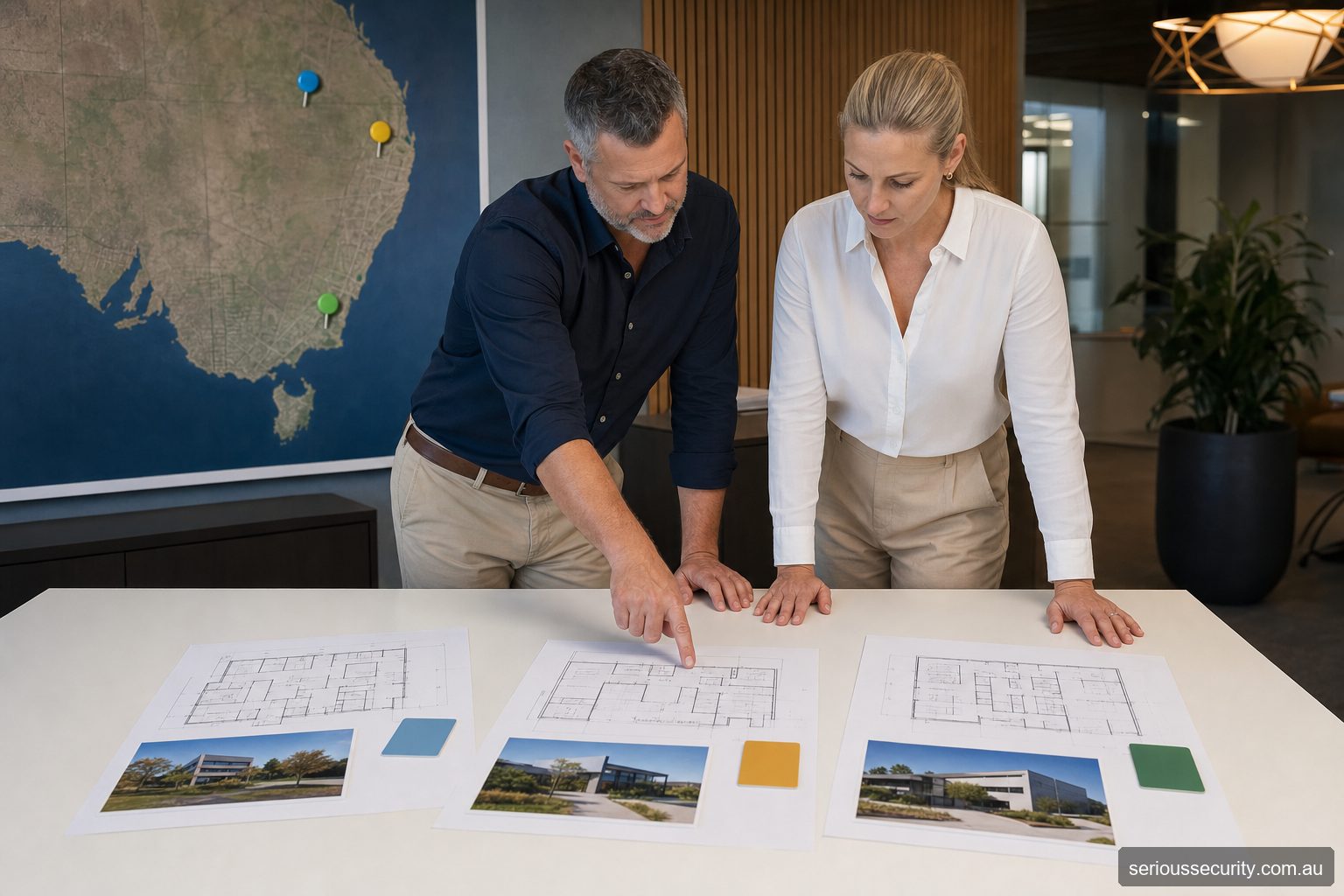
Where this approach fits
It suits organisations that regularly move staff between branches, need central standards or want delegated local administration. Sites can still require different door hardware, schedules, emergency plans and privacy practices. Avoid forcing one access group onto locations with genuinely different operations.
Design the complete opening and interface
Define the central platform, site controllers, network paths, time services, identity sources and local fallback. Each site needs a door schedule and operating owner. Confirm whether controllers continue from local rules when wide-area links or central services fail.
Plan safety, failure and exceptions
A central account can affect many sites, so privileged access, strong authentication, logging, backup and change control are critical. Plan regional internet outages, loss of the central server, conflicting database changes and acquisition or disposal of a site.
Administration and ongoing ownership
Use standard role names and approval paths while allowing controlled local exceptions. Decide who can create users, grant cross-site access, review events and support after hours. Test restoration and site onboarding; keep a register of versions, licences and integration differences.
Multi-site requirements
| Area | Decision |
|---|---|
| Site autonomy | Which door decisions continue if the central service or WAN is unavailable? |
| Identity | Who creates users and grants cross-site roles? |
| Delegation | What can local administrators change? |
| Standardisation | Which access groups and door names are common? |
| Exceptions | How are site-specific hours and emergency plans preserved? |
| Recovery | How are central and site configurations backed up and restored? |
Design the exception workflow
For Multi Site Access Control, normal authorised use is only one test. Document the lost credential, unavailable administrator, communications outage, power issue, user who cannot use the preferred method and opening that does not return to its secure state. Name who responds and what they may safely do.
Acceptance evidence
- Current models, firmware, software and licences
- Approved door, user and permission schedule
- Normal, denied and exception test results
- Power, network and service-failure behaviour
- Integration cause-and-effect results
- Administrator roles, backups and update ownership
- Known limitations and outstanding actions
Questions to resolve
Is multi-site access control suitable for every property?
For Multi Site Access Control, no. Suitability depends on the operating need, physical equipment, safety duties, administration and verified product compatibility.
What information is needed to quote multi-site access control?
For Multi Site Access Control, provide the relevant openings, users, schedules, exception cases, interfaces, site constraints and required failure behaviour.
Who should participate in a multi-site access control design review?
For Multi Site Access Control, include the client’s security or facilities owner and installer; IT, building, fire, lift, gate or privacy specialists may also be required depending on this design.
How should multi-site access control be tested at handover?
For Multi Site Access Control, test normal authorised use, denial, representative exceptions, monitoring, integrations and agreed failure conditions without creating an unsafe state.
Which multi-site access control claims need human confirmation?
For Multi Site Access Control, product capabilities, site-specific compliance, safety interfaces and any privacy or legal statements require current specialist review.
Discuss the operating requirement
Share plans or photographs, user groups, normal and exceptional journeys, integrations and known building constraints. Serious Security can assess projects in Sydney and Melbourne.