
Whats the difference between an Analog / Digital CCTV system?
Cameras on an modern analog CCTV system send their video in the traditional base band format over coax or UTP cabling back to a digital video recorder (DVR). Here, video is digitized and stored on hard drives. Most modern DVRs can allow the streaming to be accessed remotely from the LAN, or with the proper configuration, from across the internet.
IP or Digital video cameras broadcast their video as a digital stream over an IP network. Like an analog system, video is recorded on hard drives, but since the video is an IP stream straight from the camera, there is more flexibility as to how and where that video is recorded. The DVR is replaced with an NVR (network video recorder), which in some cases is just software since it doesn’t need to convert analog to digital. Video footage can then be stored on hard drives as directed by the NVR software.
Why choose an analog system?
cost is generally lower. Analog in general is lower quality up to 800TVL only (quite pixellated)
What is HDCVI / HDTVI?
These newer technologies allow digital signals to be communicated over COAX cables and thus you are able to use old cables to transmit the data. These are commonly used to upgrade old systems to up to 5MP or even 4K clarity. They are usually more cost effective than upgrading to a completely IP based system.
Why choose a completely digital system?
The data for these cameras are transmitted over CAT5/CAT6 cables instead. They run back to an NVR. They are more complicated to set up, but can utilise IP addresses to pull in data from other camera sources (don’t have to be local)
What warranties do you have on your CCTV products?
Our CCTV systems have a warranty of 24 months. This is both a parts and labour warranty.
Our installation team have been in the industry for years. Over this time, they have seen inferior products come and go. We have selected to work with products that we are because of their general quality and the reliability.
How do I pay for my CCTV System?
Cash, bank deposit, credit card are all OK. Credit card – a surcharge of 1.5% exists.
This is expected to be payable on completion of the job. The exception to the rule is if you agree with our staff to specfic alternative payment terms.
How does a CCTV surveillance system work?
CCTV (Closed Circuit Television) systems use cameras to capture video footage, which is then transmitted to a monitor or a recording device.
The cameras send the information on the data it captures to the DVR or NVR. The video record then:
- transmits the information to the screen
- records the information on the hard disc
- connects to a router which broadcasts it across the web
This broadcasting is what allows you to access your feed from any computer, iphone or android device.
How long does it take to install a CCTV system?
A typical 4 camera system takes around 3-5 hours to install for either a single storey home / standard office. It will take more time if your building is large or you need more cameras.
For an 8 camera system on a double storey home, it couild take up to a day (6-8 hours).
For a warehouse, we find that on average 8 cameras will take up to 2 days.
Which of your cameras have night vision?
All of our cameras have infra red – or the ability to see at night. At night the cameras adjust to the light by turning into black and white mode.
8MP black and white

4MP Colorvu (night time colour)

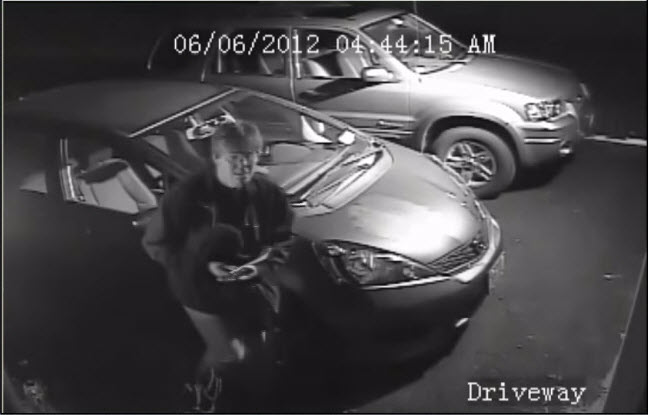
Sample of night vision for 700TVL system. (low resolution)
What is the difference between a 6MP and a 8MP system?
The main difference between the two from a user standpoint is the resolution. The resolution of CCTV cameras refers to the clarity and detail of the images they capture. Higher resolution means more detailed images, which can be crucial for identifying faces, license plates, and other important details.
6 Megapixel (6MP)
Resolution: 3072 x 2048 pixels
Very high resolution with excellent detail. Ideal for monitoring large areas or critical points. Perfect all rounder for most applications.
8 Megapixel (8MP) / 4K Ultra HD
Resolution: 3840 x 2160 pixels
Ultra-high resolution offering superior detail. Excellent for facial recognition and license plate identification. (usually 3 metres of extra clarity compared to the 6MP)
Higher storage capacity needed.