
Guide resource
Standalone vs Networked Access Control explains a decision that can materially affect security, safety and administration. Use it to prepare for a site assessment, then have the final design checked against the building, door and operational requirements.
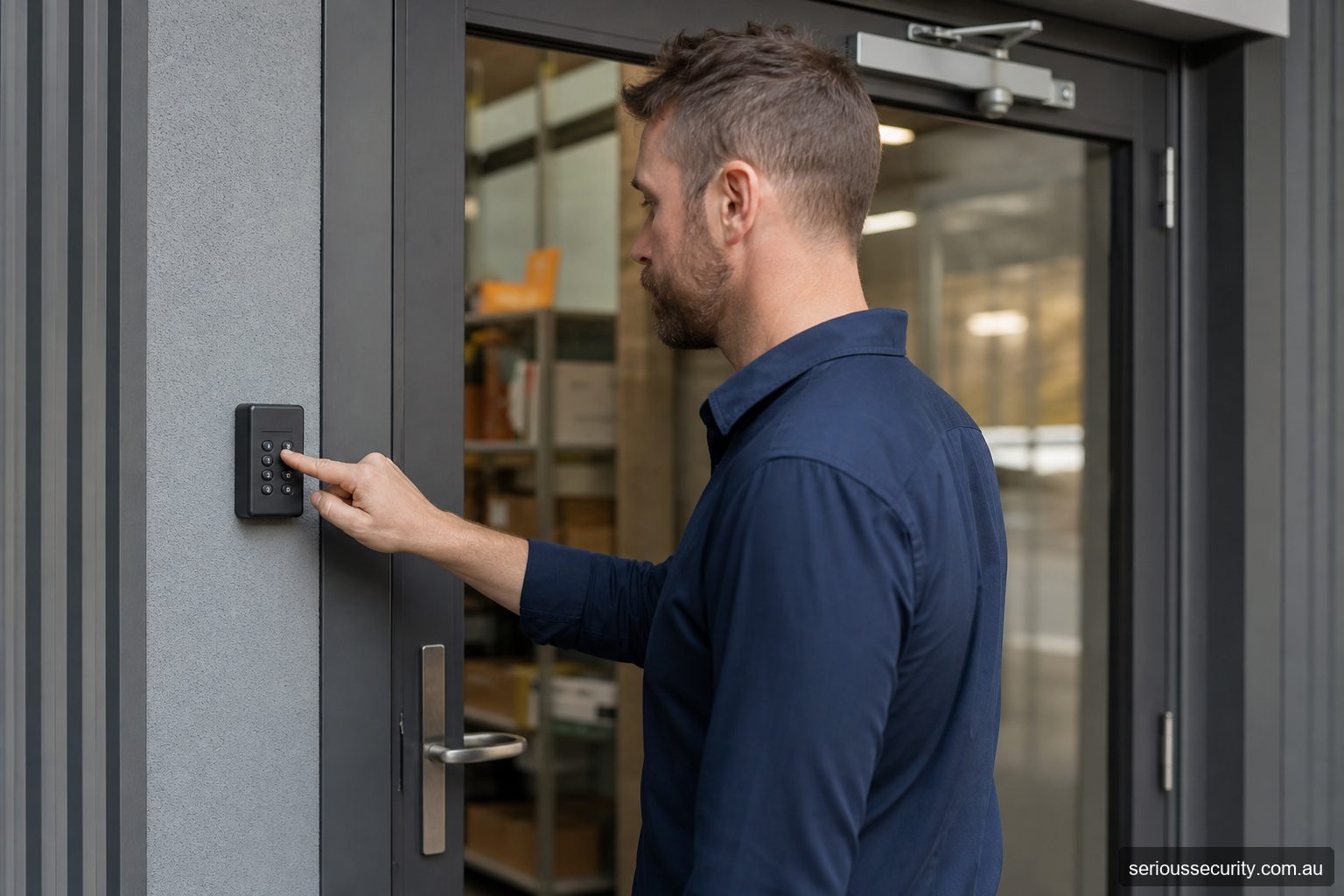
The real difference is shared administration
A standalone device generally makes and stores decisions locally for its own opening. A networked system coordinates users, permissions, schedules and events across connected controllers or doors. Both can continue operating locally in some designs; “networked” does not necessarily mean every entry decision travels to a remote server.
Compare the daily operating burden
| Decision | Standalone | Networked |
|---|---|---|
| Add or remove a person | Change each relevant device separately. | Use central administration for supported doors and sites. |
| Investigate an event | History may be local, limited or unavailable. | Named, time-aligned events can be reviewed centrally when configured. |
| Outage dependency | Less network dependence, but local device or power failure still matters. | Requires documented controller, server, network and WAN failure behaviour. |
| Expansion | Simple additions may create multiple separate databases. | Expansion may be coherent within verified platform capacity and licensing. |
| Cybersecurity | Fewer connections but physical programming and local credentials still need control. | Accounts, segmentation, updates, backups and remote access require ownership. |
Compare two ordinary sites
One storeroom: six trusted staff use an internal room, changes are rare and attribution is not essential. A well-managed standalone keypad or reader may be proportionate if exit and door hardware are correct.
Five staff doors: employees change regularly, schedules differ and the manager needs to revoke one credential promptly. Five separate keypads may cost less initially but create five change points and weak accountability. A networked system may reduce operational risk.
A hybrid can be valid when ownership remains clear
A site may use networked credentials at perimeter doors and a standalone solution for a low-risk internal room. Document the separate administrators and leaver steps; otherwise the isolated device is easily forgotten. Avoid using a hybrid merely because incompatible products accumulated over time.
Use change frequency as the trigger
Count doors, but also count monthly starters, leavers, contractors, schedule changes and investigations. Administration volume often justifies networking sooner than door quantity alone. Ask for the complete cost of hardware, cabling, software, licences, training and ongoing support.
Standalone vs Networked Access Control questions
What decision should the standalone vs networked access control guide support?
For Standalone vs Networked Access Control, use it to record the relevant door, user, administration and failure requirements before equipment is selected. It is a planning aid, not a universal compliance certificate.
Does the standalone vs networked access control guidance apply to every opening?
For Standalone vs Networked Access Control, no. Door construction, traffic, egress, fire significance, accessibility, environment and other building systems can change the appropriate design.
What site information is needed for standalone vs networked access control?
For Standalone vs Networked Access Control, provide numbered doors, photographs or plans, user groups, operating hours, credential preferences, interfaces, known building constraints and expected changes.
Who should review a decision based on standalone vs networked access control?
For Standalone vs Networked Access Control, the client and security designer should review it, with IT, building, fire, electrical, privacy or specialist contractors involved where their responsibilities are affected.
What should be tested after applying standalone vs networked access control?
For Standalone vs Networked Access Control, test authorised and denied use, normal exit, physical closure, monitoring, relevant power or communications conditions and any integration from original event to operator outcome.
Discuss your access-control requirements
Share the door locations, approximate user numbers, site plans or photos, integrations and expected growth. Serious Security can prepare an itemised proposal after the requirements and site conditions are assessed.
Request an itemised access-control quote Sydney: (02) 8734 3250 Melbourne: (03) 8513 0799