
Guide resource
Access Control Planning Checklist explains a decision that can materially affect security, safety and administration. Use it to prepare for a site assessment, then have the final design checked against the building, door and operational requirements.
The practical distinction
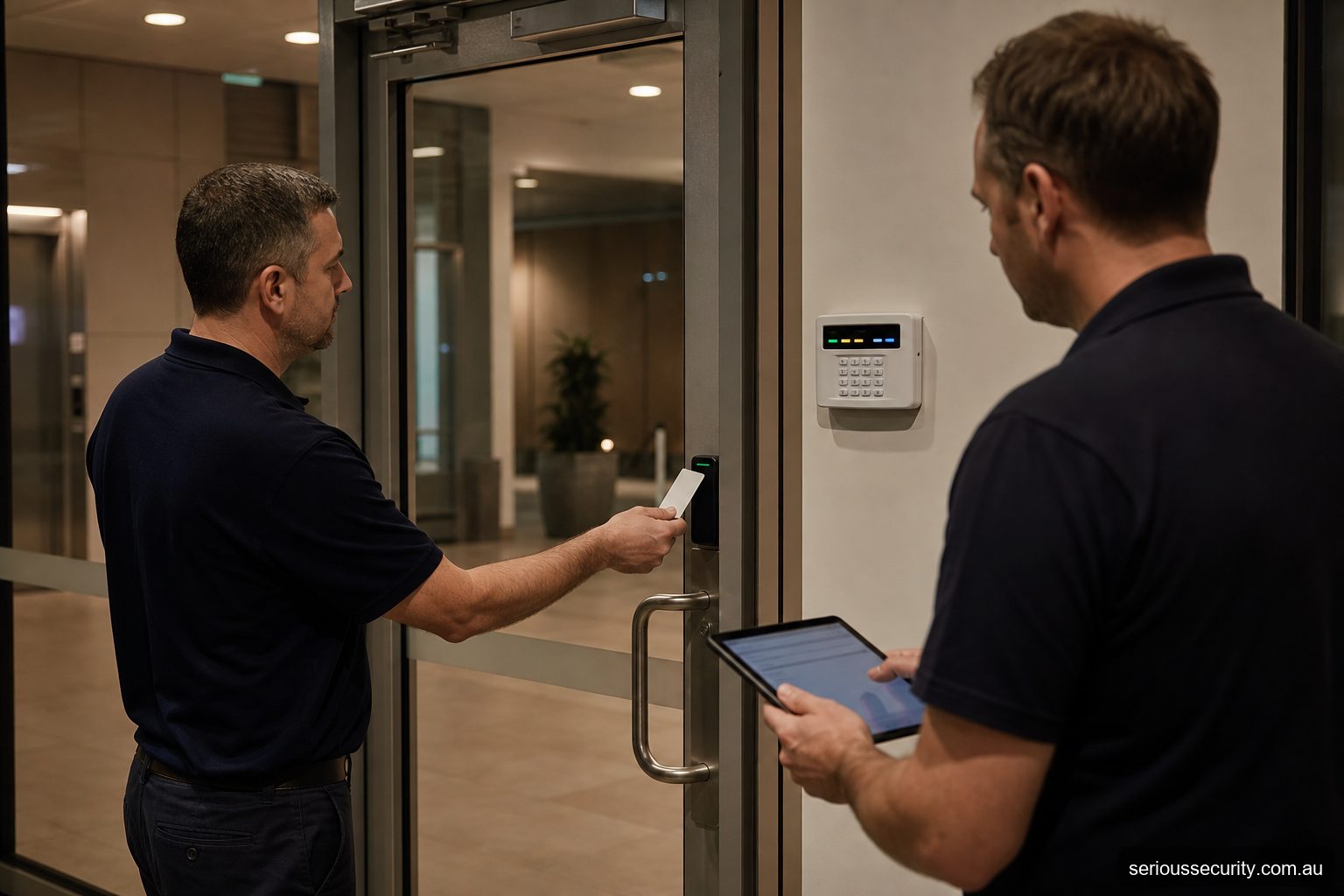
Access Control Planning Checklist matters because access control combines identity, authorisation and physical door operation. A credential identifies or helps authenticate a user; a reader collects it; a controller applies rules; and the lock follows an output. Door monitoring reports state but does not itself lock the opening.
Access-control planning workbook
1. People and authority
- List permanent, casual, visitor, contractor, cleaner and emergency user groups.
- Name who approves access and who can administer the platform.
- Document starter, role-change, lost credential and leaver processes.
- Identify privacy, HR, IT, facilities and building stakeholders.
2. Doors and journeys
- Number every proposed door, gate and lift interface.
- Trace normal, after-hours, visitor, delivery and emergency journeys.
- Record construction, existing hardware, exit method and known fire significance.
- Identify public, staff, operational and high-risk zones.
3. System and credentials
- Compare PIN, card, fob, mobile and any proposed second factor.
- State which decisions remain local during network or service failure.
- Estimate users, events, doors, sites and realistic growth.
- Assign network, server, backup, update and remote-access responsibilities.
4. Integration and response
- Write alarm, CCTV, intercom, gate, lift and BMS integrations as cause and effect.
- Name who receives each important event and what they do.
- Define outage and fallback behaviour.
- Confirm interfaces, versions and licences from current documentation.
5. Delivery and handover
- List approvals, permits, inductions, work windows and temporary access.
- Agree commissioning tests and acceptance responsibility.
- Require as-installed door schedules, drawings, backups and training.
- Set maintenance, review and escalation arrangements.
Planning approval log
| Decision | Owner | Evidence |
|---|---|---|
| Door scope | Facilities or project owner | Numbered plan and door schedule |
| User groups | Business and HR owners | Approved access matrix |
| Door hardware | Security and relevant building specialists | Survey, models and assessed function |
| Networks and hosting | IT owner | Architecture, accounts and support responsibilities |
| Integrations | Owners of both systems | Cause-and-effect schedule |
| Privacy and records | Organisation’s responsible adviser | Purpose, access, retention and notices |
| Acceptance | Client project owner | Commissioning, training and handover record |
Stop and resolve these issues before ordering
- Unknown fire, egress, automatic-door or lift significance
- No owner for access approvals and leavers
- Unverified credential reuse or product capacity
- “Integration” with no written event flow
- Unassigned network, backup or cloud account ownership
- No safe cutover and temporary-entry plan
- Unclear recurring fees, licences or support term
Access Control Planning Checklist questions
What decision should the access control planning checklist guide support?
For Access Control Planning Checklist, use it to record the relevant door, user, administration and failure requirements before equipment is selected. It is a planning aid, not a universal compliance certificate.
Does the access control planning checklist guidance apply to every opening?
For Access Control Planning Checklist, no. Door construction, traffic, egress, fire significance, accessibility, environment and other building systems can change the appropriate design.
What site information is needed for access control planning checklist?
For Access Control Planning Checklist, provide numbered doors, photographs or plans, user groups, operating hours, credential preferences, interfaces, known building constraints and expected changes.
Who should review a decision based on access control planning checklist?
For Access Control Planning Checklist, the client and security designer should review it, with IT, building, fire, electrical, privacy or specialist contractors involved where their responsibilities are affected.
What should be tested after applying access control planning checklist?
For Access Control Planning Checklist, test authorised and denied use, normal exit, physical closure, monitoring, relevant power or communications conditions and any integration from original event to operator outcome.
Discuss your access-control requirements
Share the door locations, approximate user numbers, site plans or photos, integrations and expected growth. Serious Security can prepare an itemised proposal after the requirements and site conditions are assessed.
Request an itemised access-control quote Sydney: (02) 8734 3250 Melbourne: (03) 8513 0799