
Guide resource
Fail-Safe vs Fail-Secure Locks explains a decision that can materially affect security, safety and administration. Use it to prepare for a site assessment, then have the final design checked against the building, door and operational requirements.
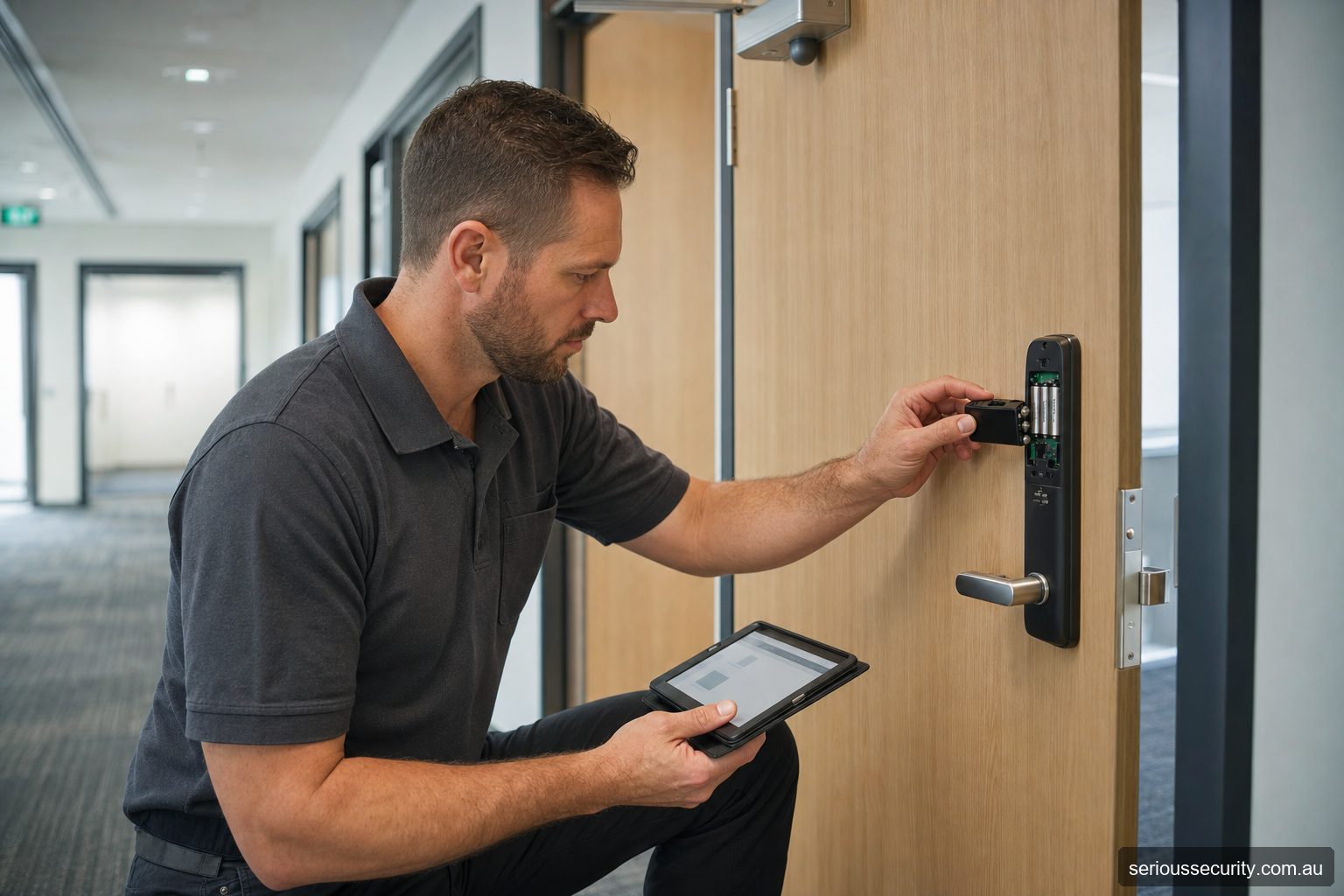
Apply fail-safe and fail-secure to a specific locking device
A fail-safe electric lock releases when electrical power is removed. A fail-secure electric lock remains mechanically secure when power is removed, while approved mechanical egress may still operate from the inside. The terms describe the device’s power-loss state; they do not describe the entire doorway as safe or secure.
Test four different events—not one vague “failure”
| Event | Question |
|---|---|
| Loss of normal mains | Does backup power maintain the system, and for how long? |
| Loss of lock power or field cable | What does this particular lock do, and can occupants still use the approved exit hardware? |
| Fire or emergency interface | Which signal or direct circuit changes the lock state, and how is reset controlled? |
| Controller or network fault | Does local hardware continue making decisions, and are required release paths independent? |
Base selection on the opening and approved strategy
Perimeter security, public entry, fire compartments, stair doors, plant areas and internal storerooms can justify different arrangements. Coordinate the door’s egress, fire, accessibility and security requirements with appropriately qualified practitioners. Do not choose a mode solely because it sounds safer.
Commission the real cause-and-effect
Remove the relevant power source under controlled conditions, activate required emergency interfaces, test exit from the occupied side and confirm restoration. Record the lock model and mode, power source, battery, release devices, wiring path and observed state for each event.
Expect different modes within one building
A site may legitimately use different lock behaviours on different openings. For example, an internal storeroom, perimeter staff door and controlled stair door do not necessarily share the same security, egress or fire requirements. Keep the decision door-specific in the hardware schedule so future technicians do not apply one remembered rule across the entire building.
Fail-Safe vs Fail-Secure Locks questions
What decision should the fail-safe vs fail-secure locks guide support?
For Fail-Safe vs Fail-Secure Locks, use it to record the relevant door, user, administration and failure requirements before equipment is selected. It is a planning aid, not a universal compliance certificate.
Does the fail-safe vs fail-secure locks guidance apply to every opening?
For Fail-Safe vs Fail-Secure Locks, no. Door construction, traffic, egress, fire significance, accessibility, environment and other building systems can change the appropriate design.
What site information is needed for fail-safe vs fail-secure locks?
For Fail-Safe vs Fail-Secure Locks, provide numbered doors, photographs or plans, user groups, operating hours, credential preferences, interfaces, known building constraints and expected changes.
Who should review a decision based on fail-safe vs fail-secure locks?
For Fail-Safe vs Fail-Secure Locks, the client and security designer should review it, with IT, building, fire, electrical, privacy or specialist contractors involved where their responsibilities are affected.
What should be tested after applying fail-safe vs fail-secure locks?
For Fail-Safe vs Fail-Secure Locks, test authorised and denied use, normal exit, physical closure, monitoring, relevant power or communications conditions and any integration from original event to operator outcome.
Discuss your access-control requirements
Share the door locations, approximate user numbers, site plans or photos, integrations and expected growth. Serious Security can prepare an itemised proposal after the requirements and site conditions are assessed.
Request an itemised access-control quote Sydney: (02) 8734 3250 Melbourne: (03) 8513 0799