
Guide resource
Magnetic Locks explains a decision that can materially affect security, safety and administration. Use it to prepare for a site assessment, then have the final design checked against the building, door and operational requirements.
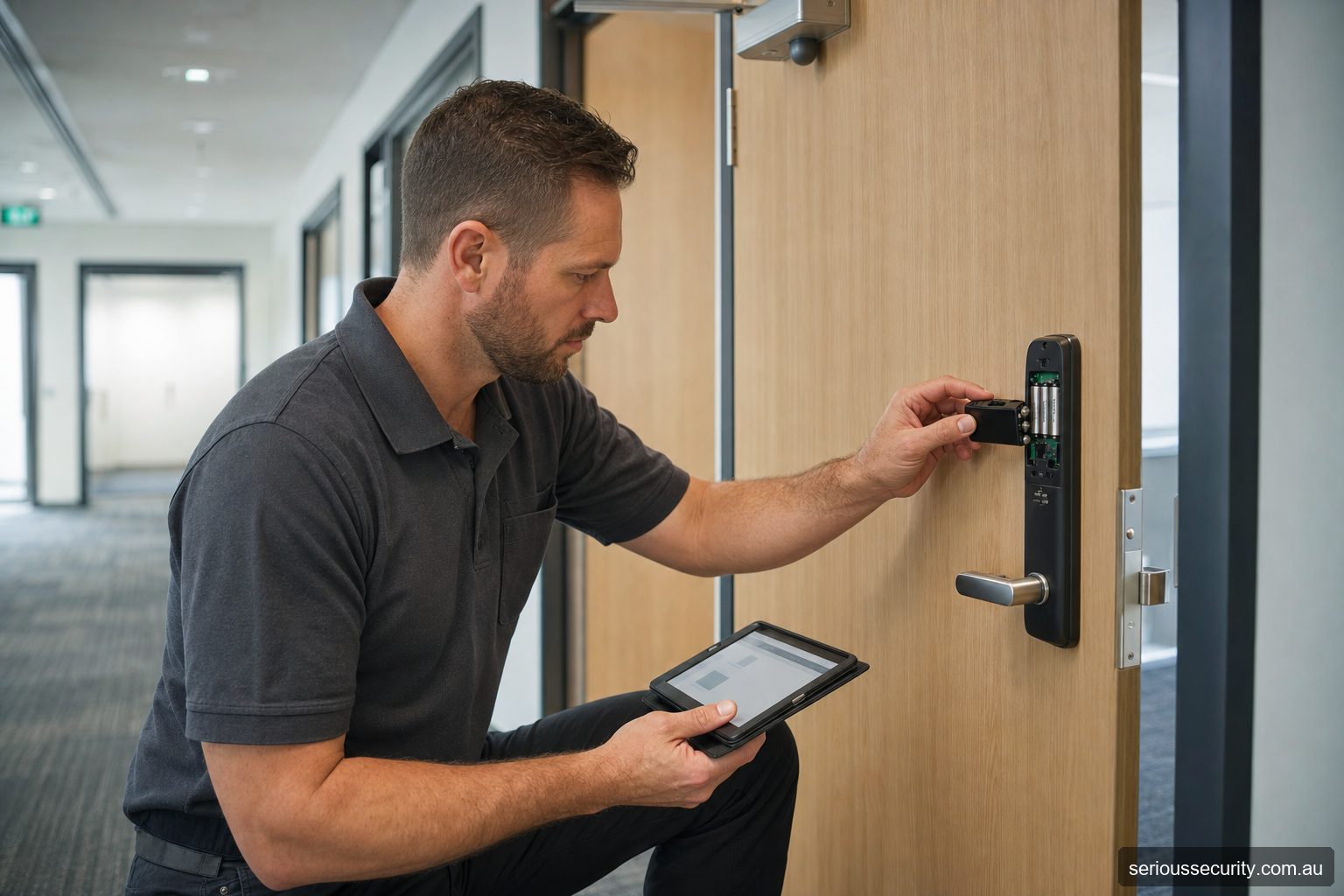
Understand what an electromagnetic lock does
An electromagnetic lock develops holding force while powered and releases when its power is removed. It does not pull a poorly closing door into alignment and it does not provide a mechanical latch. Reliable operation depends on full armature contact, rigid mounting, correct voltage and a door that returns consistently to the closed position.
Use a magnetic lock only where the release strategy is appropriate
Maglocks may be considered on selected glass, aluminium or other openings where purpose-designed mechanical locking is impractical. Their power-to-lock nature makes exit, emergency release, fire interfaces and power supervision central to the design. A convenient mounting location is not sufficient justification.
Compare the maglock with an electric strike, electrified mortice lock or other suitable hardware. Consider security on loss of power, forced-entry resistance, appearance, door loading and whether the building can support the required release arrangements.
Diagnose holding problems at the door
- Partial armature contact caused by door sag, closer drift or a rigidly mounted armature.
- Incorrect supply voltage, excessive cable drop or undersized power equipment.
- Residual magnetism or binding that delays release.
- Release devices wired through an inappropriate or undocumented path.
- A door-position sensor that reports closed even when the armature has not seated.
Test every release path independently
Verify authorised entry, free/approved exit, request-to-exit operation, emergency release, power loss, fire interface where required, door-held events and restoration. Confirm that no software, network or controller fault can defeat a required direct release path.
Label supplies and release equipment, record the wiring cause and effect, and train the site on faults that require immediate service rather than repeated reset.
Magnetic Locks questions
What decision should the magnetic locks guide support?
For Magnetic Locks, use it to record the relevant door, user, administration and failure requirements before equipment is selected. It is a planning aid, not a universal compliance certificate.
Does the magnetic locks guidance apply to every opening?
For Magnetic Locks, no. Door construction, traffic, egress, fire significance, accessibility, environment and other building systems can change the appropriate design.
What site information is needed for magnetic locks?
For Magnetic Locks, provide numbered doors, photographs or plans, user groups, operating hours, credential preferences, interfaces, known building constraints and expected changes.
Who should review a decision based on magnetic locks?
For Magnetic Locks, the client and security designer should review it, with IT, building, fire, electrical, privacy or specialist contractors involved where their responsibilities are affected.
What should be tested after applying magnetic locks?
For Magnetic Locks, test authorised and denied use, normal exit, physical closure, monitoring, relevant power or communications conditions and any integration from original event to operator outcome.
Discuss your access-control requirements
Share the door locations, approximate user numbers, site plans or photos, integrations and expected growth. Serious Security can prepare an itemised proposal after the requirements and site conditions are assessed.
Request an itemised access-control quote Sydney: (02) 8734 3250 Melbourne: (03) 8513 0799