
Specialist building integration
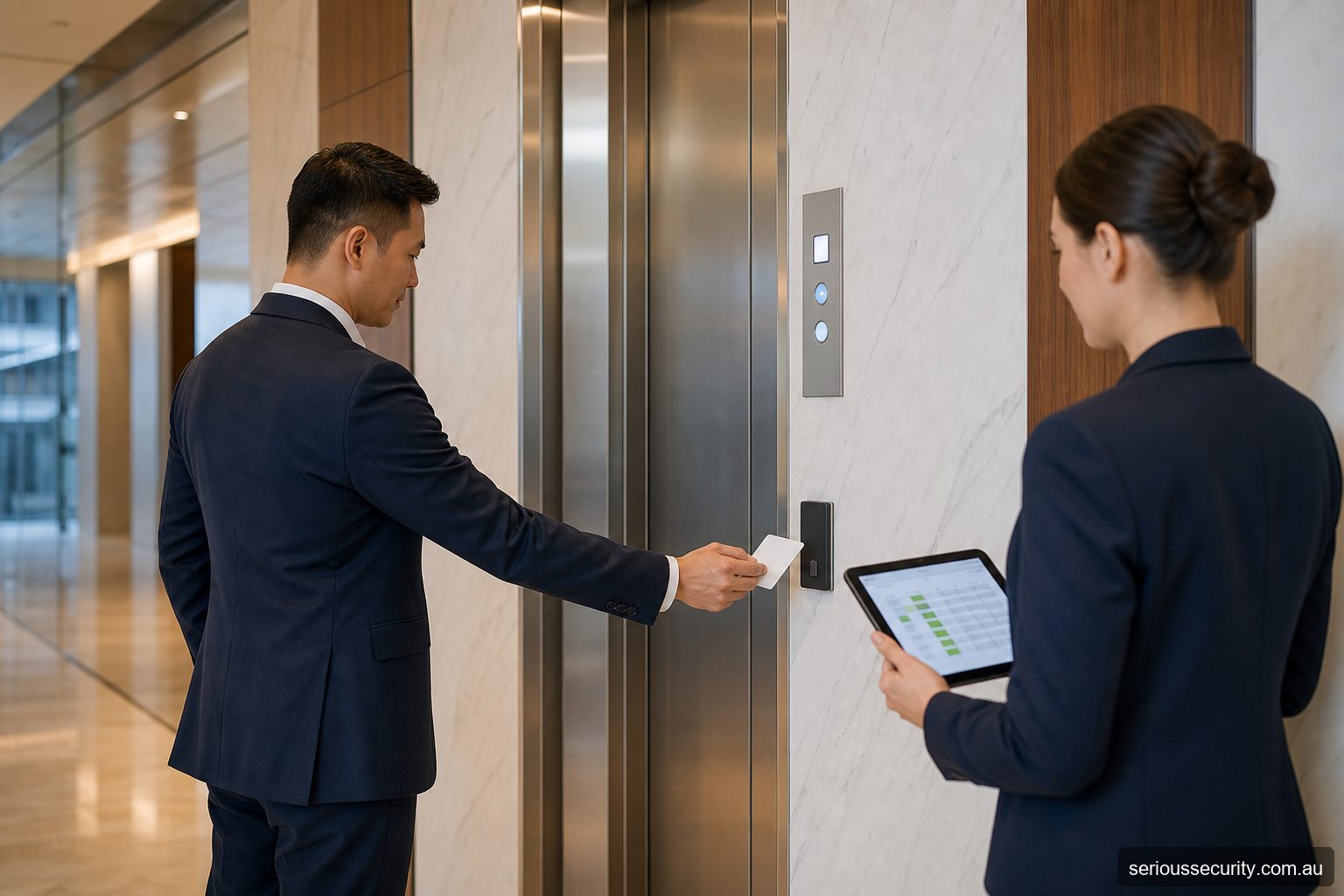
Access-control and lift integration lets an approved credential influence available floors or lift calls. The security system supplies an authorisation; the lift system remains responsible for lift movement, safety and emergency operation.
Define the exact lift journey
“Control the lifts” can mean enabling selected floor buttons inside a car, allowing a destination request at a lobby terminal, calling a lift after credential presentation or releasing a door into a lift lobby. Each workflow uses different interfaces and affects visitors differently.
Trace residents or staff, visitors, cleaners, contractors, facilities and emergency services from the building entrance to the destination. Include car parks, shared facilities and after-hours routes.
Create a user-and-floor matrix
| Group | Questions |
|---|---|
| Staff or residents | Which home, work and common floors, at what times? |
| Visitors | Who approves, how is the destination selected and when does permission expire? |
| Cleaners | Which floors and service windows, with what plant or key access? |
| Contractors | Is an escort, work order or limited date required? |
| Emergency services | How do approved emergency and fire-service modes supersede normal access? |
Divide responsibilities clearly
The lift contractor should approve connection points, interface equipment and lift programming. The access-control designer defines user permissions and supplies the agreed output or supported data. Building management approves operational and base-building changes.
Record who supplies relays, interface boards, licences, cabling, software configuration and commissioning attendance. A security installer should not connect unsupported wiring to lift equipment.
Plan failure and emergency modes
- Access server or controller offline
- Lift interface communications lost
- Building power failure and restoration
- Fire service or emergency lift operation
- Credential system unavailable
- Visitor intercom or reception unavailable
Normal security permissions must not interfere with approved lift emergency behaviour. Confirm the required state with the lift, building and fire professionals.
Commission end to end
- Test representative users for every permission pattern.
- Test each relevant car, terminal and floor.
- Verify schedules, expiry and denied selections.
- Test visitor release from start to destination.
- Verify agreed failure and restoration behaviour.
- Record the final floor matrix, interface and software versions.
Lift integration responsibility matrix
| Area | Decision to document |
|---|---|
| Access-control provider | Credential rules, user/floor matrix and approved interface output |
| Lift provider | Lift equipment, safety, interface approval and lift programming |
| Building management | Property approval, operating rules and stakeholder coordination |
| Fire/building professionals | Relevant emergency, fire and building assessment |
| Client administrator | Users, visitor permissions and expiry |
| Commissioning team | End-to-end tests across cars, terminals, floors and failure states |
Proof to retain at handover
- Approved user, door and schedule matrix
- Models, versions, licences and interfaces
- Normal, denied and exceptional test results
- Power, network and emergency behaviour
- Named administrators and service owners
- As-installed schedule, backup and known limitations
Lift integration questions
Can access control stop a lift at a floor?
The access system generally authorises floor selection or a request; the lift system controls movement. Exact architecture must be agreed with the lift provider.
Can visitors receive temporary lift access?
Potentially through reception, intercom, visitor or destination workflows. Define destination, validity and fallback.
Does every lift support the same interface?
No. Compatibility, approved connection and licences depend on the lift equipment and provider.
What happens during a fire mode?
Approved emergency lift functions take precedence over normal access permissions. Obtain site-specific professional confirmation.
Who tests the integration?
Access, lift and building representatives should test their respective systems together against the approved cause-and-effect schedule.
Scope the whole lift journey
Provide lift details, floor matrix, user groups, visitor process and the relevant lift and building contacts.