Commercial access control
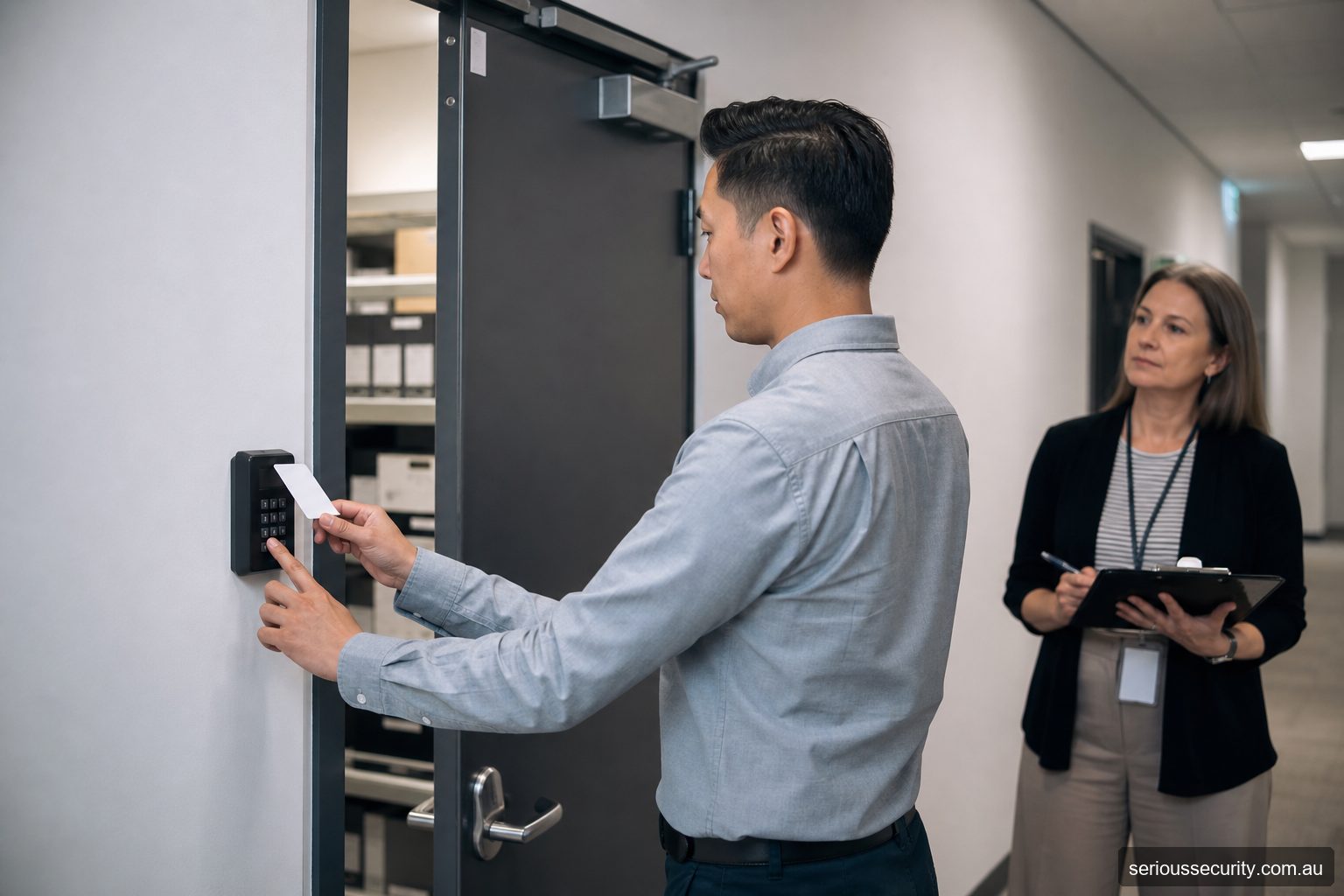
An intercom call and a staff credential solve different entry problems. The intercom helps an operator assess and release a visitor; access control applies standing permissions to enrolled users. Combining them can simplify the entrance when the workflow is clearly designed.
Separate visitor release from staff access
Staff should generally use their normal credential rather than calling reception. Visitors call a nominated destination, are identified under site procedure and receive a timed release. Delivery, contractor and after-hours calls may need different routing.
A remote release is an operator decision, not a credential transaction. Event records should make that distinction clear where the platform supports it.
Design the entrance as one system
Reader, intercom station, camera view, lock, door contact, closer, exit device and automatic-door operator must work together. Check speech intelligibility, lighting, mounting height, weather exposure and network conditions as well as lock operation.
The door should relock after the visitor enters, and a held-open condition should reach someone able to respond.
Plan failure and privacy
Decide what occurs if reception is unavailable, the network drops or the remote user cannot answer. Do not leave an entrance permanently unlocked to compensate for an unreliable call path.
Video and call records may involve personal information. Confirm access, retention, signage and organisational policy before enabling recording features.
Visitor call and door release
| Stage or evidence | Decision to document |
|---|---|
| Visitor arrives | Call the correct reception, resident or duty point |
| Operator responds | Use audio and useful video context under site procedure |
| Release authorised | Send a timed release without granting permanent access |
| Door opens and closes | Monitor return to secure state where configured |
| Call unanswered | Route, record or escalate under an agreed fallback |
Implementation checklist
- Separate staff credential entry from visitor calling
- Position camera, microphone and speaker for real conditions
- Provide an accessible and after-hours alternative
- Protect directories, call logs and recordings
- Test network, app and reception-unavailable scenarios
Evidence to retain at acceptance
- Approved scope, assumptions and responsible parties
- Current models, versions, licences and interface description
- Door, event or workflow commissioning results
- Relevant network, power and failure behaviour
- As-installed drawings or schedules
- Administrator and operator training record
- Known limitations and outstanding actions
For Video Intercom, acceptance should prove the customer-facing outcome, not merely that individual devices power on.
Frequently asked questions
How should the door scope be set for Video Intercom?
For Video Intercom, control doors where managed entry creates a clear operational or security benefit. Survey all related entry, exit and emergency routes before deciding.
Can existing credentials be retained for Video Intercom?
For Video Intercom, possibly, but credential technology, encoding, ownership and security should be verified before promising reuse.
Who should administer Video Intercom?
For Video Intercom, nominate trained people with enough authority to approve, change and remove access. Limit privileged accounts and review them regularly.
Which integrations are useful for Video Intercom?
For Video Intercom, often, but the precise interface, licence, event flow and failure behaviour must be confirmed for the proposed products.
What information supports a quote for Video Intercom?
For Video Intercom, provide door photos or plans, user numbers, operating hours, credential preferences, integrations, site constraints and expected growth.
Prepare an access-control brief
Send Serious Security the door locations, approximate user numbers, plans or photographs, required integrations and likely growth. The team can assess the site and prepare an itemised proposal for Sydney or Melbourne.
Request an itemised access-control quote Sydney: (02) 8734 3250 Melbourne: (03) 8513 0799